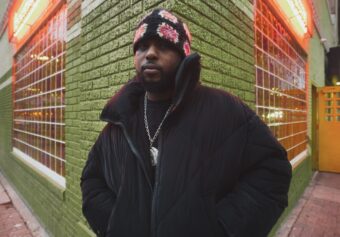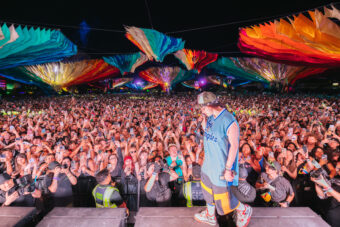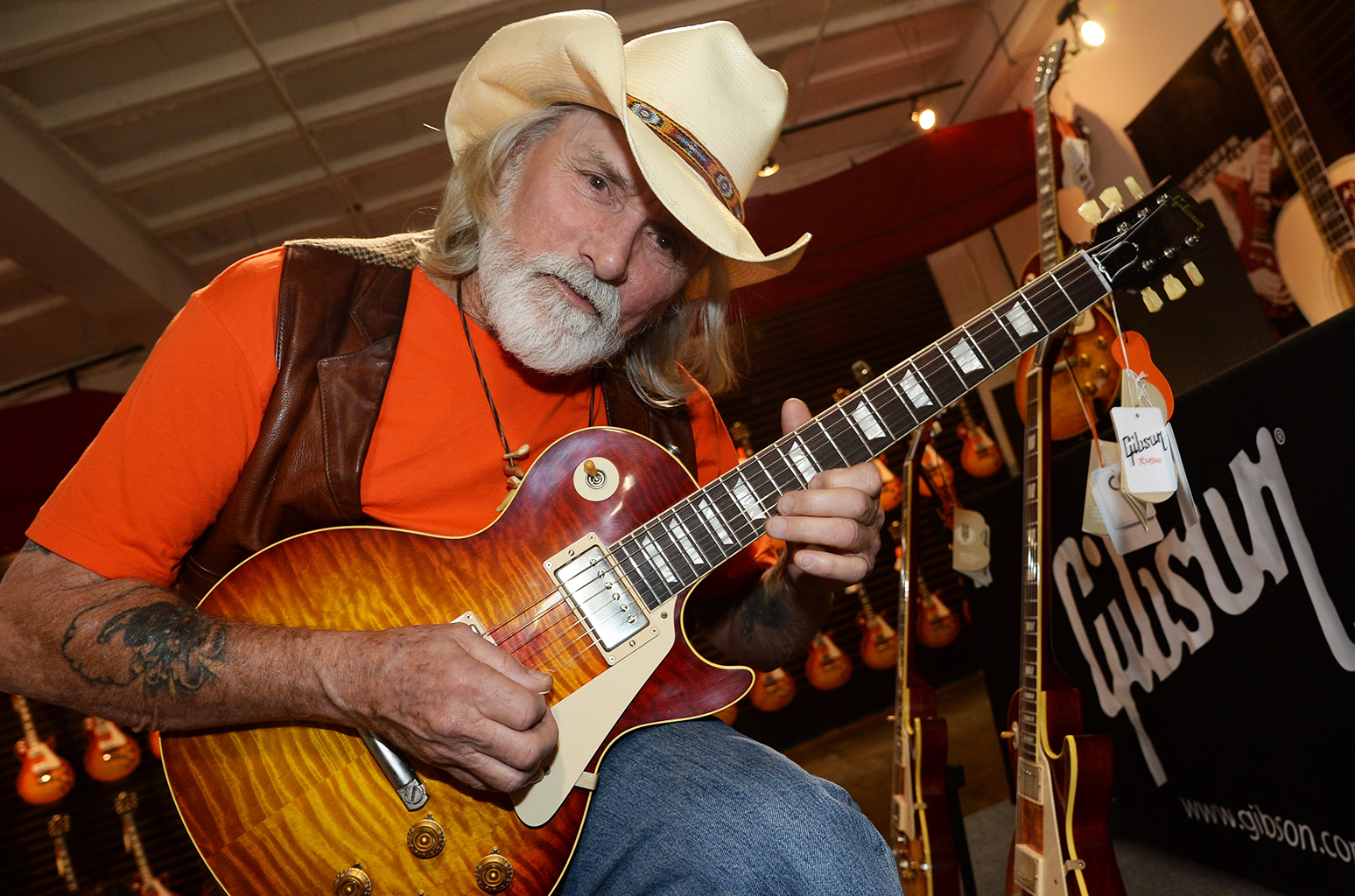

Over the course of two decades, Stephen Malkmus has traded Pavement’s inscrutable, self-reflexive wordplay for marathon prog-guitar solos. “I’m just not that much into words lately,” he says. Yet he speaks to us anyway.
For most of the ’90s, Stephen Malkmus may have been the perpetually smirking face of indie rock. Pavement, the quintet he formed in his hometown of Stockton, California, with fellow singer/guitarist Scott Kannberg, became the figureheads of a scene, as passionate about elegantly formed pop songs as they were about noise, chaos, and diffidence. When they broke up in 1999, Malkmus stepped back from the spotlight a bit — “It seems like someone else’s world now,” he says of the band’s glory days — and formed the Jicks. (With a lineup that includes bassist Joanna Bolme, keyboardist/guitarist Mike Clark, and former Sleater-Kinney drummer Janet Weiss, his fourth post-Pavement album, Real Emotional Trash, is out now.) On a rainy afternoon in the toy-strewn Portland, Oregon house he shares with his wife, Jessica Hutchins, and their daughters, two-year-old Lottie and seven-week-old Sunday, the formerly itinerant Malkmus, now 41, looks back on his 20-year career, careeah, Korea, Korea.…
What was it like growing up in Stockton in the ’70s and ’80s?
Well, it was the time of John Hughes movies and skateboard culture. It was a much more Los Angeles–influenced place than San Francisco — kids would wear Quiksilver surfer shorts and ride skateboards. It was hot and flat. My parents moved there because they wanted to raise a family, and in Los Angeles in the ’70s, there was a gas crisis and the Watts riots and Manson — not that that really affected them much, but they were just a middle-class family who wanted space for their kids to ride bikes over to another kid’s house.

Also Read
Every Pavement Album, Ranked
Were you one of the skaters?
Yeah. We had a place called Inland Surf; I went there. But I wasn’t finding abandoned pools. There was a half-pipe my friends had. I was a little scared, because there was an early episode in Sacramento. It was a birthday party, this guy wiped out, and his braces went up into his mouth. He was bleeding down his face, and I was like, Man! I don’t really have the body type. I guess Tony Hawk is tall and thin, but it seemed like the littler, lower-center-of- gravity guys were having more success on skateboards.
When did you start buying records and getting into punk?
I guess a little bit in high school. Devo were the sort of gateway band that broke into punk for me. Dead Kennedys were the band that came to Stockton first. They had a lot of appeal to a teenager: very sarcastic and infantile, but also there was some social commentary, and their records were really great. That was when I started playing guitar. I had a soft-string Spanish guitar or something. I had some lessons, but then I played bass in a Stockton band called Straw Dogs. They had already been performing — they were called the Young Pioneers, and they were kind of the older generation of guys who were into the Damned and Johnny Thunders. They seemed old then, but they were 19 or 20. Back then, you sort of wanted to have a little gimmick, so the Young Pioneers were communists. But the Straw Dogs weren’t — we were more melodic. And we had some thrash songs, but no dogma, really, other than that our singer had a mohawk.
By the time you started recording, there wasn’t really any of that California punk sound in what you were doing.
Yeah, I went away to college. Your tastes change — you go to school and people are like, “You like this? You gotta hear this,” you know?
The first couple of Pavement records seemed mysterious: “Who is this S.M.? Who’s this Spiral Stairs?”
That was kind of taken from Swell Maps and Chrome, and the hipper edge of college radio, where some big brother was saying, “You need to be into the Fall.” The early Pavement wasn’t, “We’re gonna start this way. First we’ll release this, then we’ll get picked up by a bigger label and get signed.” It was more like, “Well, we’ll just record this one document, and it can be found ten years later or something.” That kind of discovery is what’s fun about music.
From the outset, Pavement were unique in that you were openly upper-middle-class — you had nice sweaters, good haircuts, you were probably the first band to use the word docent in lyrics…
Well, we went to college — we weren’t going to hide it. Mudhoney were deliberately anti-intellectual; Sonic Youth hid it in art damage.
Back in 1994, you had a brush with fame with “Cut Your Hair,” a song that seemed to be about careerism.
Yeah, and it’s too bad it wasn’t quite the song that could’ve really pushed the band. For all the mistakes that were made marketing Pavement, it comes down to the song; and the song was pretty good, but it just wasn’t the song of the time. The Offspring song [“Come Out and Play”], “Cannonball” by the Breeders — those were bigger songs people could get behind. Being in a band at that time in New York, looking through the Village Voice with a gajillion bands playing every night, or knowing that the CMJ music conference was coming, it was about Pavement being bemused by — or afraid of — committing to wanting that.
Are you less ambivalent now about how your legacy is perceived?
I’m very lucky on that front. I’m basically proud of what we did and what we’re doing, and that people are into it still. I don’t know what more I could’ve expected from the humble beginnings — not that we weren’t confident that what we were doing was good, but that it could have that much of an impact that we could tour around and meet a lot of cool people and not have a regular job. Good bands and people have generally come out of the time that we came from — it’s gone on longer than probably anyone thought it could.
It’s too bad ‘Cut Your Hair’ wasn’t the song that pushed the band. It was good, it just wasn’t the song of the time.
Do you think that if Pavement were a bunch of 22- or 24-year-olds starting a band now, you’d be hit by blogger backlash?
I don’t think so. If you click with people, it will ride through. The proof is in the pudding. I mean, people do still like music. They connect to it for whatever reason — the song does rule, even if marketing and timing and luck and stuff are important.
Are you still in touch with the other members of Pavement?
Well, Scott’s up in Seattle — I saw him recently. Bob [Nastanovich] is in my fantasy basketball league, so I see him online. Whenever I get to New York, I always see Mark [Ibold]. And the drummer [Steve West] is sort of lost in childville in the middle of Virginia — he’s a little AWOL, but he’s still my friend. We still all get on, but it’s hard to imagine that band being a living entity again. If we ever got back together again, I’d like it to be later, when we’re really paunchy and our fans are cashing in their IRAs.
You’re one of the few major bands from that era that hasn’t reunited.
I’ll go see reunion bands; I have no problem with that. My Bloody Valentine? I’d like to see them. Van Halen and the Police — I like both bands, but I probably wouldn’t want to spend two hours at a mega-arena.
When did you start to believe you could make a long-term career out of playing?
Pavement was just kind of a simulated band — we didn’t play shows, really — it was just for our entertainment. When Slanted and Enchanted got a lot of press, we did a real tour with real venues, and then thought, “Yeah, we can treat this like a real thing.” There’s an indie touring industry that was growing up at that time — new clubs in urban centers, bigger guarantees for the bands. People who want to live off their bands today have to tour, because the record sales aren’t that great, unfortunately, and you can’t rely on a car commercial — you probably only get one or two in your life. But now, my new band with Janet and Joanna is a live thing, and it’s probably better live than it is on record, in a way. The records aren’t as bad as Grateful Dead records, but we’ve become a more in-the-moment thing as we’re getting older. When you’re younger, you really want to have your documents, you want to make your statement. And now the live thing is the moment and the moments are going away soon, so you want those.
With the Jicks, you’ve started playing in much more of a guitar-hero way.
I probably feel like, with my limited vocal range and limited topics that I’m even interested in singing about, it’s logical that I’d rather just get to the instrumental part. I like singing and I like melodies and stuff, and in concert I like to let it go and feel the singing, but in practice you don’t really want to do that over and over again. With guitar, there’s always something to discover.
Do you write any poetry or words that don’t go with music?
Not really. I wish I did. I’m the kind of person who sees something or thinks of something and wishes they had something to write it down with, and then forgets. But that could be a problem of having a child; I did more of that when I was younger. It gets to the point where there’s so much that’s been said. I’m just not that much into words lately.
There’s a theme of domesticity in your lyrics, all the way back to the early records, where you sing about parents and sons. Now titles like “Elmo Delmo” and “Wicked Wanda” sound like they could be for children’s songs. Have you always wanted to settle down and have a family?
I don’t think so. Maybe subconsciously, but I didn’t see myself as a family man. That stuff just comes fast as you get older. If you get in a serious relationship, you decide to do it, or decide “We don’t wanna have kids. Let’s travel the world.” But for me, it was part of getting serious.
How does being a parent now affect the kind of music you make?
I guess it’s less likely I’d make a really dirty song, but maybe I wouldn’t do that anyway. There’s less time, but more focused, concentrated time. You can’t just pick up the guitar for a couple of hours and think, “Hey, that’s good. I’ll remember that.” For other people who are very organized, it’s probably fine.
What is your day-to-day life like when you’re not recording or touring?
I spend a lot of time here, just looking after the kids. It’s pretty domestic, basically. I play darts once a week at the Triple Nickel. Pavement doesn’t have a manager, so there’s business stuff — I did a Hyundai ad in Korea, so you have to talk to people, send invoices…
You sang Bob Dylan songs with the Crust Brothers [his occasional live collaboration with Silkworm] and on the soundtrack to I’m Not There. When did you first get into Dylan?
I was never much of a fan of his, to be honest. If you listen to early Velvet Underground, in a way they’re very similar. Lou Reed was a huge fan of Bob Dylan — “Run Run Run” sounds just like this other song, the one with the “eeeeoooo!” [“Highway 61 Revisited”]. Plus, I saw him with the Dead in the ’80s, and he was really boring. But, all that being said, I always respected his word ability and groundbreaking early-’60s moves — I can only imagine what it was like to be there for that. It’s fun to sing his songs. He’s a fellow Gemini, not that that matters to me. But I can relate to his attitude. It’s kind of punk.
Toward the end of Pavement, you and Nastanovich were investing in racehorses. Are you still involved with that?
No, that was just a one-off thing. You kind of have to get into it from when you’re young — you can’t just start when you’re in your 30s. My friend Ned is amazing at judging basketball talent; he’d be a great scout for the Blazers, but they don’t let you tap into businesses halfway through. You have to pay your dues even if you’re better than the person who did pay their dues. It’s kind of a drag.
If you could emulate anyone’s career, whose would it be?
Well, when you feel like sort of a lifer in music, of course there’s Sonic Youth. And Mark E. Smith [of the Fall], but that’s a tough model; that probably takes a dark, dark heart. I haven’t thought about transitioning into anything else in my life. I mean, I don’t know how to do anything else.
Courtney Love once called you the Grace Kelly of rock. What does that even mean?
I’d take it as a compliment, because Grace Kelly is very graceful and cool. So as far as I’m concerned, that’s far better than being the — what’s his name who played Buddy Holly? — the Gary Busey of rock. It means you’re kind of classy a little bit, right?
Discography: Stephen Malkmus
From lo-fi wunderkind to prog-rock torchbearer in six easy steps
Pavement
Slanted and Enchanted
Matador, 1992
Pavement’s debut album, recorded as a trio with original drummer Gary Young, twisted together the whole history of the rock underground and remolded its DIY dissonance into a vehicle for smart, crafty pop songs. Now expanded to a double CD, including the glorious Watery, Domestic EP.
Pavement
Westing (by Musket and Sextant)
Drag City, 1993
A compilation of the insanely inventive EPs that preceded Slanted and set the tone for the indie rock of the ’90s — fully formed songs alongside amorphous sound-squiggles, recorded on the cheap and wrapping chewy tunefulness in bristling noise.
Pavement
Wowee Zowee Matador, 1995
Their third and most stylistically all-over-the-place album incorporates frantic punk rock, chilled-out country, daffy fake Bowie, single-minded drone jams, and a handful of anthems — about “this generation” and growing beyond it — that resolutely refuse to take a stand.
Silver Jews
American Water
Drag City, 1998
Malkmus was part of Virginia poet David Berman’s cracked country-rock band Silver Jews, and he’s played guitar on their records on and off since 1992. Turns out he’s a great sideman, and this third album features some of Berman’s most charmingly peculiar songs.
Stephen Malkmus
Stephen Malkmus
Matador, 2001
His solo debut — backed up by Portland, Oregon pals he christened the Jicks — isn’t far off from latter-day Pavement. Still, it’s more whimsical, with subjects that include pirates, poets, Yul Brynner, and a girl with an older hippie boyfriend and “awful toe rings.”
Stephen Malkmus
Face the Truth
Matador, 2005
Mostly recorded at home and by himself, Malkmus’ third solo album doesn’t aim too high, but he sounds like he’s having a blast playing around with so-uncool-they’re-cool keyboard sounds and tossing off an eight-minute guitar freak-out.